

20 November 2026 • Featured Album • Jazz
Matei Predescu - Basme: beautiful, full of secrets, and very very convincing
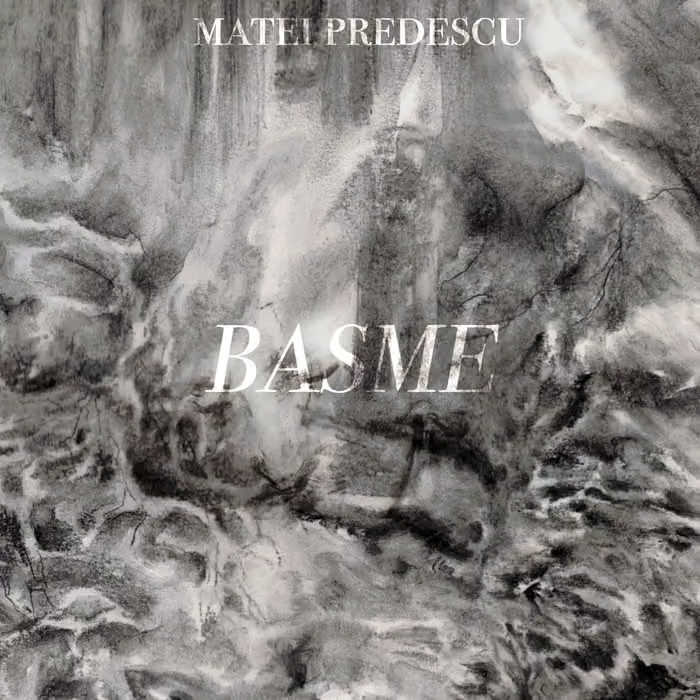
I've been observing a growing, and worrying, trend among young jazz musicians.
It feels as if many believe their music cannot break through without some sort of ideology behind it.
Proof? Every other contemporary jazz release that lands on my desk arrives accompanied by some grand idea or elaborate theme it supposedly explores.
Power struggles in modern America. Civic hope. Resilience. Yadda yadda.
But most of the time, you can't find a trace of that ideology in the music. And unfortunately, sometimes it even feels that the artist spent more time developing the theme than the music.
Luckily, Matei Predescu's debut, Basme, is different.
So very different.
Interestingly, it does actually come with a story. But for the first time ever, I can actually hear it in music. Even better, I really enjoyed uncovering it there, finding the little clues Predescu left for the listener.
Like the solemn opening of "Doina," which starts to make sense when you realize the song was named after a traditional Romanian improvised folk chant performed solo (and usually only to oneself) to express feelings of loneliness, longing and grief.
Or that seemingly simple folk harmony in "August", slowly unfolding and becoming more and more intense (only to be replaced with some amazing straight-ahead playing a moment later.)
Or...
Well, I suppose I am getting a little ahead of myself. But that's how much Basme impressed me. And if you've followed my writing, you know that it doesn't happen often.
Yet Predescu did it. Moreover, he did it with a jazz album focusing on quite a difficult subject, cultural identity.
Before you jump to any conclusions, Basme is not a gloomy record. It's not all minor keys. No. But you can hear longing, confusion, perhaps even that feeling of being lost in Predescu's compositions.
And perhaps the reason the music and theme work so well together is because Predescu actually wrote about himself?
After all, Basme is a Romanian word for fairy tales or stories. However, the fairy tales that Predescu shares have nothing to do with Zmeul, Frat-Frumos or other classic fairy tale characters from Romania.
No. His stories are far more serious.
Born in the US to Romanian immigrants who came to the country after the fall of Ceaușescu's dictatorship, Predescu grew up between two cultures.
As an immigrant myself, I can attest that it's not a small feat - both for the parents and the children born in the "new country." I've experienced it all, and so have my children. The challenges, the struggle with finding your identity. Or even trying to figure out how much of the "old country" is still relevant to you.
It's quite a story to tell. And Predescu has the talent and skill to do it.
He's well educated in jazz, from his studies at Oberlin Conservatory to studying under such legends as Billy Hart, Gary Bartz, or Eddie Henderson.
But he also exhibits something quite unique for someone so young - strong traits of his musical sensitivity.
I can already hear what his future trademarks might be: the love for contrast in tempi (his themes often switch to double-time for various sections) or playing unusual harmonies behind seemingly "ordinary" melodies.
Like in "August", performed only in trio, where he uses what to me sounds like a folk tune harmony behind a quite standard jazz melody.
Or "Urare" with those unusual harmonies again, and Predescu treating piano as a canvas.
In fact, when listening to this piece, I could easily imagine him, as a young boy, sitting by the kitchen table, watching his mum going about her day and telling stories of how things were in the old country.
Or "Little Ones," that opens with a beautiful walking bass that almost sounds ...happy.
Which brings me to another thing - Basme is also a very diverse record. You hear jazz and folk, but also a bit of free improv or sonorism (like in the beautiful "Bucharest" with its prepared piano, bass, and gentle bell sounds.)
"Bucharest" showcases another trait that runs through this record. In his work, Predescu never leaves a song in disarray. Seemingly controlled sonorism, or even chaos, always returns to harmony. Always.
I suppose that is the best way to summarize this album. It's full of secrets and contrasts, but never lets chaos dominate.
It's also very personal. You can hear that right away. But it delivers something to the listener, too, beyond the theme - great, intriguing jazz music.
And the fact that you can also hear the story in the music, in the harmonies or in little sonic clues, is a huge bonus.
My absolutely most favourite album this month.
thank you for spending a little time with me
I publish several reviews and articles like this one each month.
So, do come back whenever you feel like spending a little more time with music.
You can also sign up for my monthly digest email below.
I'll only message you once per month, sharing links to any content I published that month. You can unsubscribe at any time.
TrueResAudio Monthly Digest
about me

Hi, I'm Pawel Grabowski. I'm a music writer and the editor of TrueResAudio
I write about albums, explore musical rabbit holes, and share the joy of discovering music one record at a time.
more essays