

4 October 2026 • Rabbit Hole
Strangelove's Love and Other Demons and dark britpop
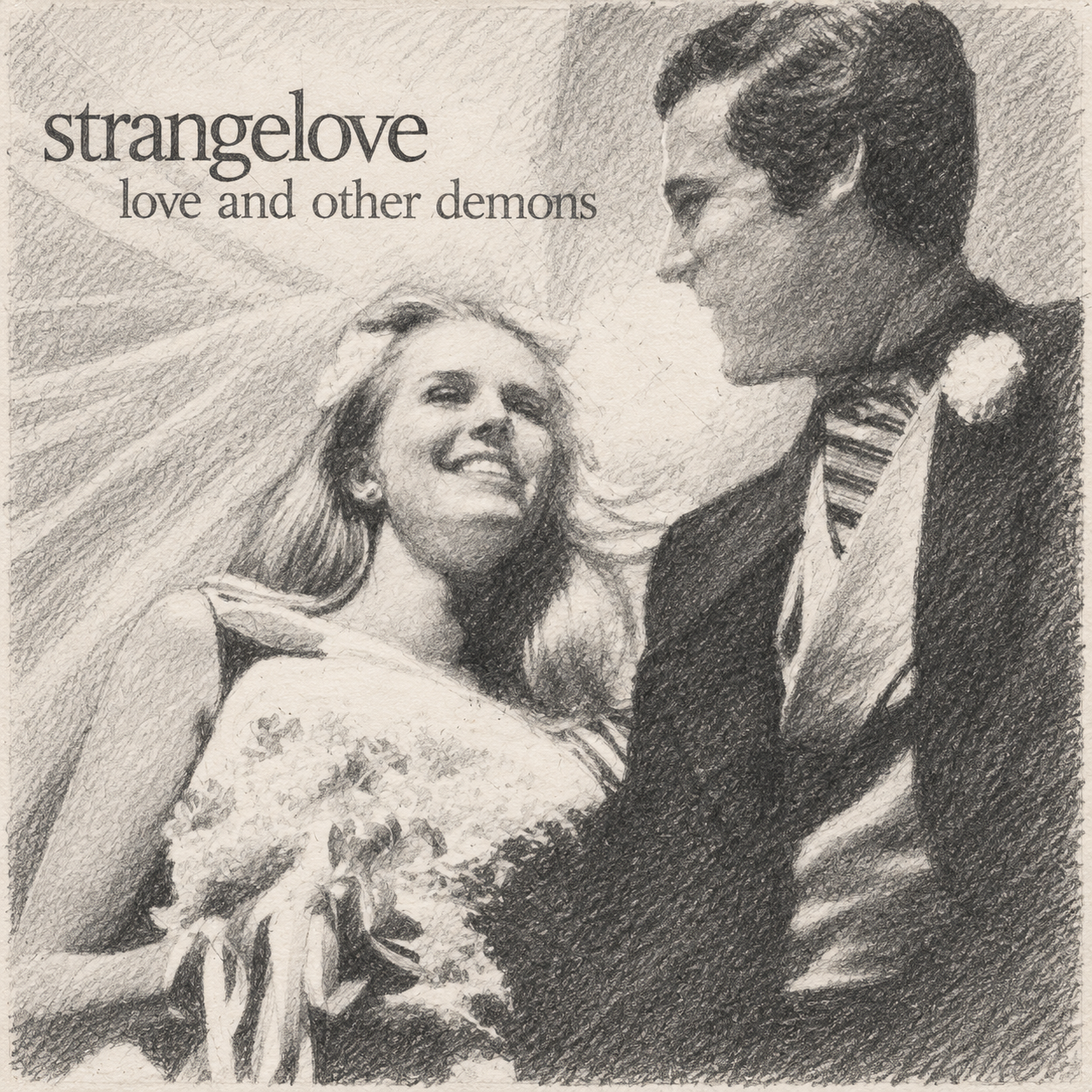
...The album's cover - a picture of a happy newlywed couple - along with the title, Love and Other Demons, immediately signals that it might not be an ordinary Britpop record. The opening guitar screech, coupled with the pounding drums, confirms it further. And then, Duff begins to howl what sounds like a desperate plea:..
By 1996, I was done with Britpop.
I couldn't stand another Wonderwall or whatever other happy tune these bands would put out.
None of it felt like what rock was supposed to be. The lads-next-door act that Oasis were putting out, the self-conscious cleverness of Blur and Pulp, Kula Shaker's pretentious hippie mysticism and, perhaps worst of all, Cast's naive romanticism.
No, that was not rock, not to me.
But then, one day, I read the review of Strangelove's second album, Love and Other Demons. The author called it Britpop yet used words like madness, darkness, exorcisms, demons, noise, or dirt in his copy... That immediately caught my eye.
And when I finally heard the album, it felt like revelation.
I discovered my Britpop.
But no wonder I never knew about it. It couldn't be found on the charts. Well, not where I lived back then anyway. It didn't make the music press' front pages either. But it's there and I was instantly on it.
In some ways, Strangelove, were a typical Britpop band, and yet also so completely different.
They formed almost accidentally in 1991, after drummer David Francolini spotted the singer, Patrick Duff busking in the street. The pair struck up a conversation and the rest was history.
They got picked up by the label in a similar manner. In 2019, Duff recalled:
We were playing at the Marquee. This was our sixth ever gig… Food Records were there to see the main band but they decided he wanted to sign us instead.
Interestingly, they were late for that gig and played without soundcheck. And yet...
Strangelove received almost instant critical acclaim. But how could it be any other way? Their sound was so different from their peers. Darker, filthier, noisier. Duff's personal lyrics stood miles apart from what Noel Gallagher was writing, too.
Strangelove quickly gained cult status. But it didn't take long for all the attention and pressure to start causing issues.
Duff felt fundamentally unsuited to the British press. Other frontmen appeared confident, extroverted and capable of selling themselves. He could not imitate that personality and interpreted even minor criticism as proof of his inadequacy.
Later, he recalled:
Other bands who were doing well all seemed to have singers with a very different personality than my own.
He also explained:
My work is very personal and I found it near impossible to discuss it with anyone, let alone with journalists.
Struggling to cope with the attention, Duff began turning to alcohol and drugs to get through interviews and performances. And so began the slippery slope that would eventually lead to Love and Other Demons...
The album's cover - a picture of a happy newlywed couple - along with the title, Love and Other Demons, immediately signals that it might not be an ordinary Britpop record.
The opening guitar screech, coupled with the pounding drums, confirms it further. And then, Duff begins to howl what sounds like a desperate plea:
"Jesus, won't you come down? ... We need you more than ever now. / Preacher, ever since you've gone, the world's been going crazy... This is a message to the sky... you gotta help me."
Just a few minutes further into the song, he exclaims "There is something somewhat missing at the heart of everyone."
It's hardly how most Britpop albums open. But the record didn't come about in a typical way either.
By 1995, when the sessions for the album commenced, Duff was in trouble. His alcoholism was taking its toll.
He admitted it in the 2019 interview, adding that he also lived "carrying around the feeling of impending doom that rarely left me."
In the same interview, he remembered that Love and Other Demons seemed like the final chance to salvage something from his life:
My personal life was now in tatters, and I decided my last chance was to throw what was left of me into our album.
But making the album turned out quite a task.
Duff, a serious alcoholic at that stage, would use Valium to get through withdrawal from alcohol and stimulants, work during the resulting periods of temporary sobriety, and then return to drinking and drugs once he was satisfied with what he'd accomplished.
I'd work until I was satisfied with what I'd done, then reward myself by sinking back down into self-destruction.
This quickly became a pattern. And knowing all this, it's hardly surprising that the album sounds as it does. The darkness, resignation, even alienation come from a very real place. And you can hear it in every song.
Beautiful Alone is based on a charming melody. Sway sounds like a warm ballad.
And yet, the first one describes love as a conflict between intimacy and independence. The narrator mourns a future that never happened in a relationship while at the same time, recognising that the woman he loved was beautiful precisely because she remained herself.
The other goes even deeper, and deals directly with Duff's alcoholism.
Spiders and Flies is all about entrapment and predation.
Even the closing song, The Sea of Black, offers no resolution. To the narrator, the sea is both grief and oblivion. His heart has already sunk into it and he expects to drift across it alone until death...
You find the same unsettled atmosphere, alienation, balancing between beauty and despair, and often resignation behind every song.
Musically, Love and Other Demons is no different.
Restrained passages explode into overloaded guitar noise. Romantic melodies carry despairing words. Duff often moves from gentle, intimate singing into howls and screams, breaking off the melody...
Casualties starts like a gentle, slightly dreamy guitar tune with plenty of silence between notes. It slowly gains speed, and as Duff begins to exclaim "We're all going down together, forever", builds into a wall of distorted sound and ... keeps going until it finally cuts off.
Elin's Photograph starts with just an acoustic guitar and ends with a full band playing what seems like a quite ordinary song if not for the piano adding quite an unnerving atmosphere to it.
1432 is a short and simple acoustic melody that reveals its edge with Duff's concluding: "Oh no I'll never feel again/Holy, holy, lowly, lowly/[...]/Since the love died inside of me"
I'm not surprised that more than one contemporary journalist referred to the album as exorcism.
It is.
But to me, listening to Love and Other Demons isn't merely about witnessing that exorcism. Every time I play this album, I feel as if I'm embarking on a journey. I'm compelled to listen, to travel through the world Patrick Duff is describing, to surrender myself to it.
It's not a fun journey, no. It's not one you want to embark on often either. But when you do, it's extremely rewarding and oddly enough, cathartic.
But Love and Other Demons isn't the only such album Britpop has produced.
You may not have heard of many of them. Most of these bands never made it big. Their music was less pop-oriented, after all. Dark lyrics didn't make it for good campfire singalongs either.
But to me, these records saved Britpop. I perceive the genre differently since discovering them.
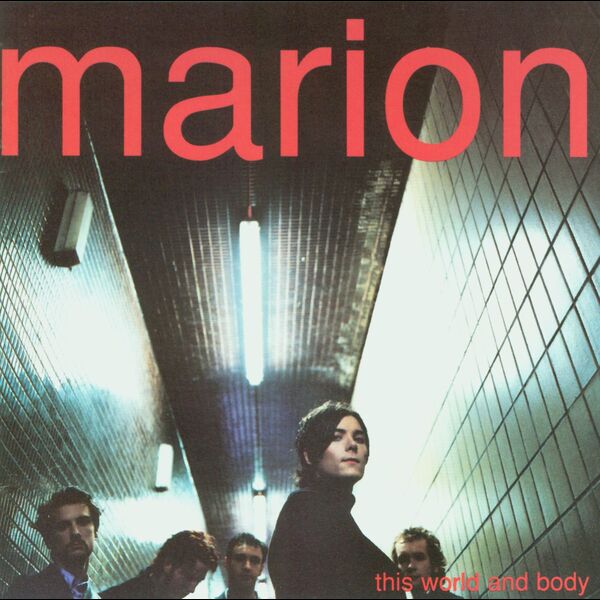
A cry of resignation and self loathing in the opening verse, followed by stories of unhappy childhood, damaged relationships, small town frustrations... Another hardly typical set of Britpop themes.
Marion formed in Macclesfield in 1993 around singer Jaime Harding and guitarists Tony Grantham and Phil Cunningham, who had known one another since their teens and had played together in earlier local groups.
In 1995 they supported Morrisey. The same year they recorded This World and Body, released the following year. In 1998, they recorded the follow up, The Program (with Johnny Marr on guitar and producing) and that was it...
This World and Body remains one of the most unusual Britpop records. For one, it's delibrately been produced to resemble a live recording. It's a raw, dirty affair with guitars often grinding against one another, creating a wall of noise, and Jamie Harding more shouting than singing.
It's no different lyrically. As the title suggests, Hardin's topics do not merely deal with loneliness, anxiety or damaged love but embrace the decadence of physical world. His characters smoke, drink, and experience emotional damage through their bodies, too.
Just like this character, who in Wait exclaims:
Turn the radio on/I want to hear a song/nothing's gonna change/but something's bound to break/so we'll have to go outside/we'll have to burn out eyes.
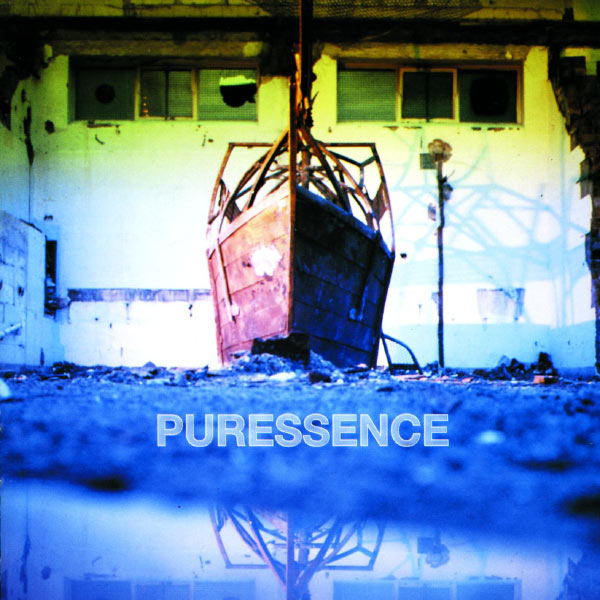
Puressences's self-titled album opens with a drifting, psychodelic guitar drone, and voice that sounds so shy and vulnerable that you can't even imagine that guy ever having the guts to step in front of an audience.
But he did. Still does, actually. And still creates that resigned atmosphere with his voice.
The original lineup of Puressence met in 1990 in Manchester on a bus heading to see Stone Roses live. After the show, they decided to start a band. It's actually as Britpop origin story as it gets.
They went on to support Marion, Charlatans, and others and in 1996 released their debut.
And it doesn't sound like the typical Britpop.
Puressence seemed more inspired by Joy Division, shoegaze, U2 (their good years anyway,) or Echo and the Bunnymen than Charlatans, Stone Roses or other Madchester bands.
On Puressence's debut, guitars run through echo effects. Bass pounds in steady rhythm. Drums provide a groove or simply accentuate the bass. You can hear more Simon Raymonde than Mani there, and that tells you a lot about the music.
And then there is James Mudriczki's voice. He sings in an unusually high, exposed register, moving between a tender falsetto, a tremulous croon and something approaching a cry. Even if some of his lyrics aren't particularly miserable, his delivery makes them so anyway.
The band's next album, Only Forever, turned more successful. But by then, the band also sounded different.
I am not entirely sure whether better, though.
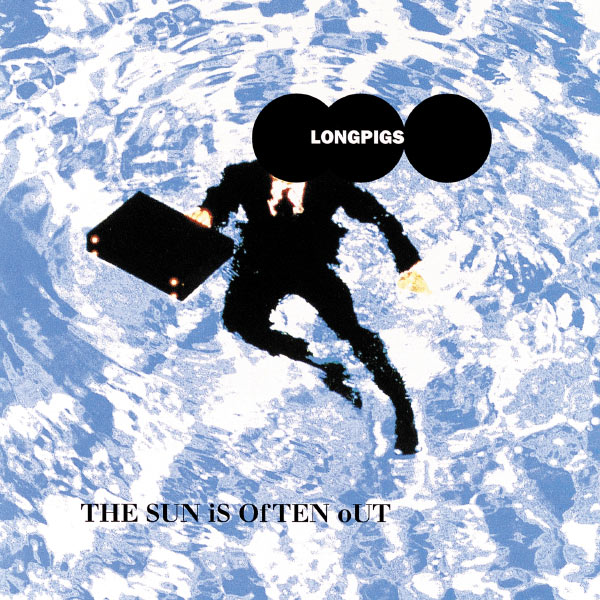
The first time I heard The Sun is Often Out I thought, Radiohead. And although there are some similarities between the two bands, there is actually an equal amount of differences.
For one, Longpigs seemed bolder. Even their name didn't meet Britpop standards as “Long pig” is an old colonial expression for human flesh intended for consumption.
They also weren't a very lucky band. Soon after signing to Elektra, Crispin Hunt, Longpigs' main songwriter and singer was seriously injured in a car accident and reportedly spent three days in a coma.
Then, Elektra's British operation was closed, leaving the band tied to a label that no longer existed.
Eventually, another label picked them up, but I always wondered how much those experiences drove the anger and rage on the record. For there's plenty of that there.
Many songs on the album sound raw, almost noisy. Guitars are distorted and played with ferocious attack. Hunt's lyrics don't carry much light either. He often sings about loss of identity, sexual humiliation, self loathing, or progression from love to leechery.
Longpigs released one more record after that. It features very little of that anger, and honestly, doesn't serve as a worthy follow up to The Sun is Often Out.
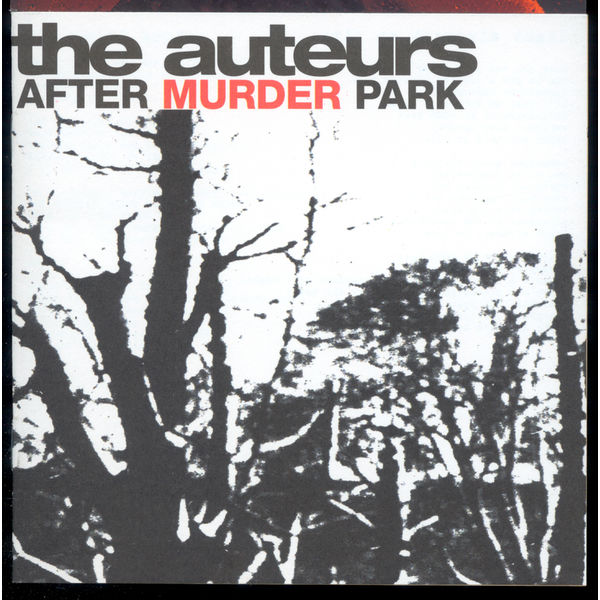
What kind of an album would you write if you did it while tied to a wheelchair? And how would that sound if you recorded it with Steve Albini at the console...
Well, you'd probably get After Murder Park...
The Auteur's third album takes Britpop into a completely different territory than Strangelove with its darkness or Longpigs' emotional desperation. Luke Haines, The Auteurs' main songwriter did write it while being stuck in a wheelchair after breaking both of his ankles.
No surprise that he writes about murder, domestic violence, alcoholism, suicide. He later admitted:
Most of my songs are about revenge. I’ve always felt unsettled, even as a kid… I’m pretty much motivated by bile and revenge.
He also deliberatly dressed it with a stripped down, raw music, with very little studio polish. Haines recalled:
We wanted the songs done in a live, direct way with the edge still on it. For this album all of the bad notes are left in. It’s the way records should be made.
That's why he asked Albini to produce it. Albini played with noise rock giants Big Black and Shellac. He produced Nirvana's In Utero, Pixies' Surfer Rosa, or Jesus Lizard's Down.
He'd not be a guy you get to record a lush sounding record.
And After Murder Park is far from being such an album.
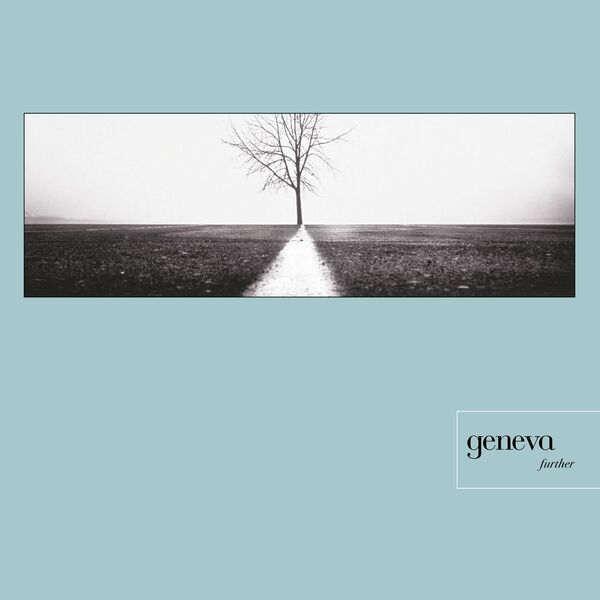
Geneva
Further
One Little Independent Records / 1996
Geneva's debut doesn't actually sound very dark at first. The music certainly feels more polished than the guitar noise of Longpigs or Strangelove. The production is spacious and songs seem more ethereal than depressing.
And yet, underneath that beauty, you hear stories of suicide, insomnia, chemical sedation, regret, anxiety, spiritual uncertainty and emotional disintegration.
Interestingly, apparently, that contrast is by design. Geneva's singer Andrew Montgomery admitted:
I love the way [soul singers] can make painful moments and transcend them into something positive, and I think that’s something that people overlook in our music.
This is what he's done with Geneva, make despair sound beautiful.
Few more records to continue the journey:
- Whipping Boy – Heartworm (not precisely Britpop, since Whipping Boy were Irish, but well worth listening. Heartworm is one of the records I've listened repeatedly to in my youth.)
- Jack – Pioneer Soundtracks
- Six by Seven – The Things We Make
- Ultrasound – Everything Picture
Oh, and one final word on Love and Other Demons, and the state Duff was in when making it.
I once saw a recording of one of his solo shows. Just before performing Sway, he recalled a moment from the album sessions when, completely stoned, he sat at a piano, repeatedly played a single note, exclaiming:
We should do this on the next album!
about me

Hi, I'm Pawel Grabowski. I'm a music writer and the person behind TrueResAudio
I write about albums, explore musical rabbit holes, and share the joy of discovering music one record at a time.
If you enjoyed this essay, you might also like my tiny magazine for music explorers, where I write about the records I've been living with lately and the rabbit holes they've sent me down.
if you'd like to stay a little longer...
If something here resonated with you, here are a few good places to continue.
- Read a complete issue of the magazine free.
- Read my articles on records and music in general.
- Learn more about TrueResAudio membership.
- Connect with me on Facebook. I use it to give readers a glimpse into my listening room, share ideas I've been thinking about, and occasionally interesting records I've stumbled across.
Or simply get in touch. I'd be delighted to hear from you.
Kindest regards,
Pawel
more essays