
TrueResAudio

Music writer, Pawel Grabowski

← Back to Issues

ISSUE #1 02 August 2026

Stravinsky meets Prog meets Nosferatu

Chamber prog of the 70s.

Stravinsky meets Prog meets Nosferatu

Welcome

I love falling into musical rabbit holes

And I love how sometimes, something completely unexpected opens up a new (or a forgotten) one. That's what happened to me recently when, during cleaning my listening room, an old demo ostentiously fell off the shelf. The result was rediscovering some of the most fascinating albums I'd completely forgotten about. You'll read about them in the main feature.

Aside from that, you'll read my reviews of three fascinating jazz albums, a few additional recommendations, hidden gems I discovered recently, and some of the music that's been keeping me company recently.

I hope you'll discover something worth listening below,

Pawel


Feature

Stravinsky meets Prog meets Nosferatu

Chamber Prog

When I was about 15, I came across an article about chamber prog, and one band in particular, Univers Zero. At that time, Poland, where I grew up, just became free of the communist rule. We could finally read about bands like this. Unfortunately, although the Iron Curtain was down, their records were still almost impossible to find.  

So, for me, the only way to experience chamber prog and Univers Zero, was to actually imagine what those records sounded like.

Based entirely on what I read in the article, I decided that this music must sound like being stuck in an old attic at night, surrounded by that eerie stillness and silence, only occasionally punctuated by even scarier artifacts: the creaking of the house settling, the water rumbling in the pipes, odd scrapings, and other noises. 

It took me a couple years to finally source Univers Zero's second album, Heresie, and to my astonishment, that's exactly what I heard in the music!

I remembered this only recently, when, while cleaning the listening room, I came across an old demo of another chamber prog group, Shub Niggurath. Suddenly, memories of all those records came flooding back, and I ended up diving into a wonderful musical rabbit hole. 

Wait, did you say, chamber...prog?

Ahah. And I do appreciate that the term may seem a little ... odd.

Chamber prog describes a group of bands, mostly active in the 70s across Western Europe, that incorporated elements of chamber classical music in their playing.

But they went far beyond what their more popular contemporaries like Yes or ELP were doing. 

Chamber prog groups incorporated, and often, directly modeled their music on modern classical composition techniques. Inspired by composers like Stravinsky or Bartok, these groups abandoned traditional song format in lieu of long-form musical structures.

Some, like Univers Zero, took that even further and complimented (and in some cases, even replaced) typical rock instruments in their lineup with classical ones, like the English horn, bassoon, viola, or trombone.

And Nosferatu?

Ah, yes. Well, there is one other thing that these groups had in common - Almost all were inspired by horror art and literature, often incorporating fantasy, occult, or macabre symbolism in their music. 

Daniel Denis, Univers Zero's primary composer, admitted that many of his compositions were based on H.P. Lovecraft's writings. Univers Zero's third album's title, Ceux du Dehors, is even a indirect reference to Lovecraft's short story, The Outsiders.

Gérard Hourbette, Art Zoyd's co-founder was known saying that he worked "at the edge of dreams or death," using this as a way to sublimate tragedy and confront the absurd.

(Art Zoyd even recorded music inspired by Poe's "The Fall of the House of Usher" and composed their own soundtrack to Franz Murnau's 1921 classic, "Nosferatu.")

And last but not least, Shub Niggurath were named after a fictional deity created by H.P. Lovacraft. (And Univers Zero's original name was another Lovecraftian term, Necronomicon).

(All of which should tell you where I got the old attic image from...)

Importantly, all that showed in the music.

Chamber prog compositions are usually long. Dark. Slow and claustrophobic. They focus on creating atmosphere. 

Melodies are sparse. Themes are usually short, used more to invoke certain feelings rather than create a melodic theme. 

Instruments are used traditionally but also, often turning to sonorism to focus on atmosphere. Scrapings, eerie glissandos, odd percussive sounds punctuating the stillness abound. 

It's not a music you could whistle while walking. But it's one you can fully immerse yourself into, and truly surrender yourself to their atmosphere.

However, unlike the goth movement that emerged a decade later, chamber prog largely escaped the pretentiousness and the temptation to turn darkness into a costume. 

There was no romanticising of misery or carefully cultivated angst in this music. 

These groups didn't try to create an image but explore music. Sure, from a particular and quite unique angle. But to them, it was the music that mattered. 

That seriousness, and the focus on music, rather than the show, is precisely why those records stood the test of time.

So, let me walk you through the most important albums of the genre.

Univers Zero – Heresie (1979)

Heresie

There's no better way to describe Heresie as a horror soundtrack.

Drums provide ritualistic pulse, violin scrape more than actually play, basson and oboe moan over one another... And then, the stillness. Bursts of short, eerie melodic lines break it occasionally but the stillness always returns...

Someone once told me that listening to Heresie is an ordeal but a magnificent one. I agree.

Listen on Qobuz

Univers Zero – 1313 (1977)

1313

Univers Zero's debut is perhaps not as refined as Heresie, certainly more raw, but it already shows the band's potential.

Harmonium, bassoon, viola and drums build tight, spiraling patterns. The music often feels like plucked from some lost medieval procession (think hooded figures, full moon... you get the picture.)

Album trivia: Univers Zero's debut isn't officially called 1313. The album doesn't actually have a title. 1313 is just the album's catalogue number that fans adopted as the title.

Listen on Qobuz

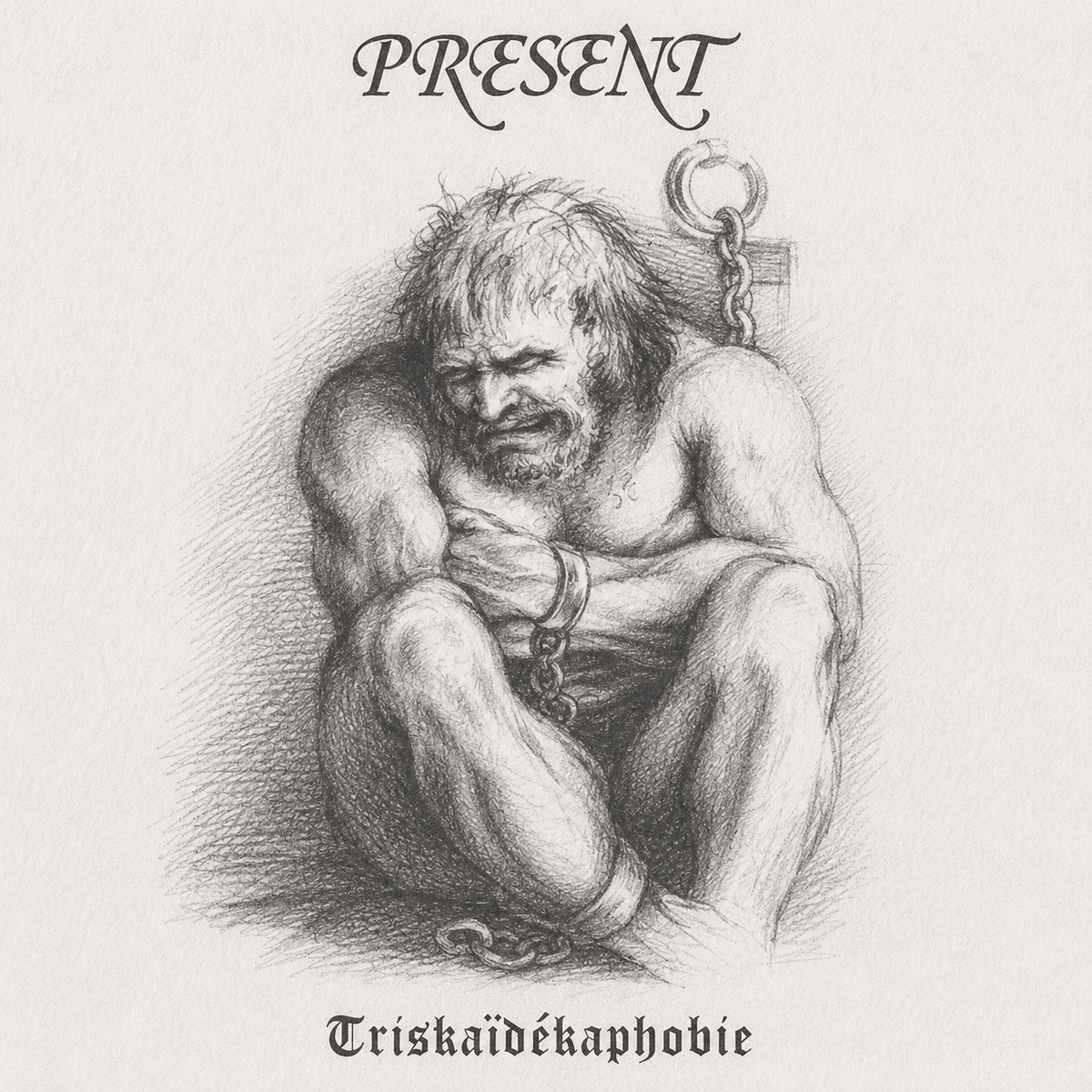
Present – Triskaïdékaphobie (1980)

Present

In 1980, guitarist Roger Trigaux left Univers Zero. But as it often happens, instead of losing a core musician of a band, we got two groups, both delivering absolutely spectacular music.

Univers continued to thrive, even without Trigaux. And he gave us Present (pun intended.)

Present featured a more typical rock lineup - guitar, piano, bass and drums - but the outcome was even scarier than Roger's previous work.

On Triskaïdékaphobie, Present's debut, instrument lines grind against each other. Hypnotically call to each other. Repeatitions abound and build an incredible tension.

The music is minimalistic, mechanical, and genuinely unsettling.

Album trivia: Univers Zero's co-founder, Daniel Denis, plays drums on Triskaïdékaphobie (as well as Present's second LP, " Le Poison Qui Rend Fou"), meaning both bands actually shared the same core members.

Listen on Bandcamp

Art Zoyd – Nosferatu (1989)

Art Zoyd

Art Zoyd never shied from openly working to literary or cinematic sources. Their music inspired by Poe's "The Fall of the House of Usher" (recorded much later than the chamber prog canon, though,) is also one of the must-hear albums of the genre.

"Nosferatu," however, is the music created to accompany Franz Murnau's 1921 film of the same name. But it delivers whether you listen alongside the picture or not.

This music doesn't actually play. It looms over you for its whole duration.

Electronic textures, sampled sounds and viola and cello smearing together into something closer to dread-inducing sound design than song.

Listen on Qobuz

Shub-Niggurath – Les Morts Vont Vite (1988)

Shub Niggurath

The French group stood out from the rest by featuring operatic soprano voice, although the singer, Ann Steward often resorted to wailing rather than singing. Trombone, distorted bass, guitar provide dissonant background, together creating a doom-laden, unsettling, and chaotic atmosphere. An absolute chamber prog gem to me!

Listen on Qobuz

Aksak Maboul – Un Peu de l'Âme des Bandits (1980)

Aksak Maboul

Aksak Moboul is, perhaps, a bit of an outlier on this list. Their music retains all the characteristics of chamber prog bar the horror and macabre. On their second album, Aksak Moboul have introduced more jazz, folk, and even noise elements into their sound.

Where Univers Zero, Present or Shub Niggurath deliver grim passages, Aksak focuses on more playful, with perhaps even a touch of humour.

Listen on Qobuz

Lacrymosa – Lacrymosa (1984) (note, the album is also known as Bugbear)

The first album from japanese Lacrymosa (please note - this is a different band than the German gothic duo, Lacrimosa) is a real curiosity among chamber prog albums. First of all, Lacrymosa is a thirteen piece ensamble. As a result, there is far more happening in the music, even though its roots are unmistakably similar to Univers Zero and Art Zoyd.

Secondly, Lacrymosa introduced many japanese folk elements into their music, up to writing full compositions that sound more like traditional music from their homeland (i.e. Bugbear.)

As a result, grim and often complex passages sit beside quiet melodic ones, and elements of free improv appear in between followed by compositions that could only be described as if taken directly from some odd medieval carnival.

Lacrymosa is hard to come by, unfortunately. But there is a version you can listen to on Youtube, and it gives a good taste of what this album sounds like.


Reviews

Members Only

This section is available exclusively to premium members.

Subscribe or upgrade your subscription to unlock it.

Also Worth Hearing

Members Only

This section is available exclusively to premium members.

Subscribe or upgrade your subscription to unlock it.

Hidden Gems

Members Only

This section is available exclusively to premium members.

Subscribe or upgrade your subscription to unlock it.

What I've Been Playing

A few records that have been keeping me company this week.

John Coltrane – Live at Birdland (Impulse!)
Absolute masterpiece, and the very first jazz record I ever heard (at around the age of 13. Nnot the easiest record to start a jazz journey with, I have to say). I've been revisiting it for an article I'm working on, and it brought back so many memories.

Emily Remler: Firefly (Concord Jazz)
I have a soft spot for a guitar-based bop/hard bop and this is one of the albums that delivers it beautifully. A rather intimate session, without any frills, or acrobatics. Just four people playing together in a room, captured in a beautiful sound, sharing beautiful compositions and soloing. What else to ask for?

John Abercrombie, Dan Wall, Adam Nussbaum – While We're Young (ECM Records)
Incredible jazz trio: organ, guitar and drums. Often considered a sister record to Abercrombie's Timeless (with Jan Hammer and Jack DeJohnette), however, this one seems more abstract than Timeless. It's an intriguing record, nonetheless, and one that reveals something new with every listen.

Group 1850 – Paradise Now (Pseudonym)
A purely accidental discovery, and a great listen. Dutch psychedelic rock album from 1969, with a tinge of folk and early Pink Floyd vibe (think their Saucerful of Secrets era). It captivated me from the very first listen. Oh, and the bass sound on this one is a pure bliss.

Final Note

I planned a completely different closing note, however, just as I was about to close this issue, I received the news that Glen Hansard, one of Ireland's most talented musicians, was killed in an accident.

If you're outside of Ireland, you might have heard of Hansard through his Oscar-winning songs for the movie Once (in which he also starred). Here, he's known for his three decades long career that includes a string of albums with The Frames, his fantastic role in the movie The Commitments, and his solo work, among other exploits.

News of his passing got me thinking about something, and I am writing this for myself, too.

We often criticise artists. We question the directions they take, or disagree with the ideas they choose to explore. But moments like this make me pause and think how grateful I am that many of my favorite artists are still with us and still write new music.

Sure, their music might not be as innovative as what they did in their prime. I might not always agree with how they develop their music today, or their artistic choices. I might not always wait for their next record with the same excitement I once had.

But today, as I listen to Hansard's amazing "Longitude" album (with the Frames), I am quietly whispering, thank you, to all musicians.

Thank you for being here. Thank you for giving us your music. Thank you for having the courage to share your darkness and light with us. And thank you for the albums that accompany us through both the brightest and the darkest days of our lives.

In memory of Glenn Hansard (1970–2026)