

TrueResAudio

Music writer, Pawel Grabowski

← Back to Issues

ISSUE #2 16 August 2026

Vashti Bunyan and Freak Folk

Daniel Bjarnason, Castanarc, hidden gems and more.
Vashti Bunyan and Freak Folk

Welcome

Typically, albums inspire artists before they make music...

Someone hears a record. Falls in love with it. Finds it expressing exactly what they've been feeling. And years later you can still hear its echoes in their own work.

But every now and then, an album does something much stranger. It inspires artists retrospectively.

Their music already exists. The genre is already taking shape. And only then does the artist stumble across a forgotten record and realise: this is where I came from!

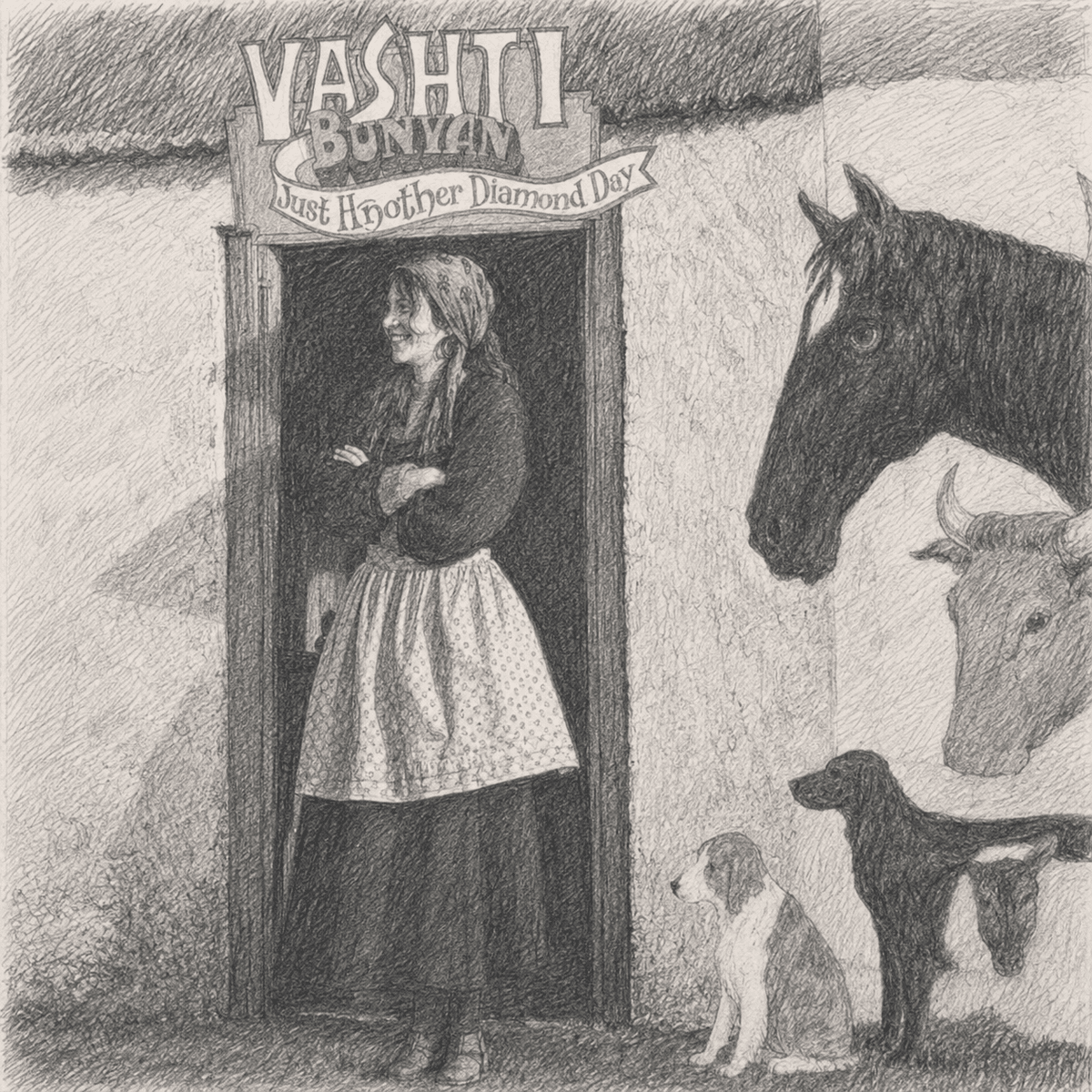
That is exactly what happened to Vashti Bunyan's "Just Another Diamond Day." It didn't make any impact on release. It spent decades in obscurity. And then, it came to be embraced as the founding record of freak folk...

I hope you'll enjoy that story, and the other records waiting for you in this issue.

Also in this issue: The haunting darkness of Daniel Bjørnasson's concertos • Castanarc's answer to modern Yes • Wes Montgomery's bootleg worth seeking out, and more.

Pawel


Feature

Vashti Bunyan's "Just Another Diamond Day" and the birth of freak folk

Vashti Bunyan

Imagine... You sell only 150 copies of your debut album (this is 1970, mind you, when albums were selling like crazy.) Disillusioned, you move on. Then, decades later, you google your name, only to discover that these copies now go for crazy stupid money. Oh, and that other artists consider you a massive influence. 

Doesn't sound too real, does it?

And yet, this is pretty much the story of Vashti Bunyan's "Just Another Diamond Day."

Ignored back in the day, today, "Just Another Diamond Day" is considered one of the founding albums of the freak folk scene, and one of the most important 1970s folk albums in general.

Bunyan got even deemed "the godmother of freak folk" (a term she herself flatly rejects, by the way.)

But the thing is... that's still not the full story... and the full one is quite rocky, actually.

Vashti was first discovered by Rolling Stones' manager, Andrew Loog Oldham and recorded one single for him, "Some Things Just Stick in Your Mind" (Decca 1965).

It flopped. 

Then, she and her partner undertook a lenghty horse and cart journey to Scotland to join a commune set up by folk star, Donovan. 

The commune dissolved before they even got there.

Nothing was lost, however. The journey became a foundation for songs on "Just Another Diamond Day." 

In his memoir, "White Bicycles", Joe Boyd, the album's producer, describes meeting her and hearing those songs for the first time: 

"Oldham's recordings were overproduced flops, so Vashti had headed north in a horse-drawn caravan [...]. She started writing songs again, and remembered my interest from four years earlier. I visited their winter quarters somewhere near Lancaster and was smitten once again with her and her music. Her new ultra-rural life, and the impending motherhood made her an even trickier commercial proposition than Nick Drake, but I couldn't imagine saying no."

"Just Another Diamond Day" took only three days to record. Members of Fairport Convention and the Incredible String Band backed her in the studio.

But, something went wrong again. This time, mixing. Bunyan lost control over pretty much every aspect of the album, from arrangements to the final mix.

Speaking to L.A. Record in 2014, she recalled, "It was pretty much the same when I went to do Just Another Diamond Day... I thought it would all be very different but Joe Boyd, the producer, took all the tapes away to America, mixed it and mastered it, and sent me what he'd done. And that was it. I didn't have any way of saying, 'Can you take that violin out?'"

But the result was astonishing.

The pastoral atmosphere, the glorification of simple, rural life, Bunyan's fragile, frail, wispy voice.... it all creates an incredible mood you simply sink into.

Songs are neither dark nor funny. They don't tell full stories, in a traditional folk canon way, either. They seem more like snippets of a travel journal, something that only makes sense if you consider the album's inspiration, the horse and cart journey across Britain.

Bunyan described the reason for the horse-cart journey as a way to "get back that feeling of childlike wonder, to remember what it was like to find the world extraordinary."

It shows.

Songs on "Just Another Diamond Day" move slowly. They rarely follow the traditional verse-chorus format. Lyrics are full of wonder about the world. Images of nature abound. Melodies are gentle and sparse. There's no percussion. Only her voice, and the natural movement of melodies creates the rhythm and movement.

The backing is actually quite sparse, too. Her voice and guitar dominate, and the whole album sounds like someone singing at the end of a hard day, accompanying the setting sun with a song.

The album hit the shelves in December 1970.

500 copies were pressed.

150 sold.

It went pretty much unnoticed by the press, with only the hardened folk music aficionados actually discovering it.

Disappointed (it was her second flop after Oldham sessions, remember), Bunyan quit music and moved to Ireland.

Speaking to Uncut in January 2024, she admitted: "For about 30 years, I gave up on music altogether. No record player or radio, I didn't even sing to my children. I felt like such a failure, it's awful. I don't like to admit it, but that's what happened."

But unknowingly to her, the album slowly gained listeners and over time, a cult status, too, something she eventually discovered by quite an accident...

"That was when I first got a computer and first got on to the internet. I put my name into the AltaVista search bar – this was before Google – and up came all these references to songs that I thought were long gone, long forgotten."

Then, English shoegaze band, Lush, covered "I'd Like to Walk Around in Your Mind", her 1967 outtake from Andrew Loog Oldham's sessions that resurfaced publicly in 1990 on the compilation Circus Days: UK Psychedelic Obscurities 1966–70 Vol. 1.

Just Another Diamond Day was also re-released in 2000, becoming available for the first time in 30 years.

And then, Devendra Banhart, reached out...

From that moment on, the story turns even more amazing.

In a space of few short years, "Just Another Diamond Day" went from a forgotten 1970s folk record to freak folk ancestor.

The 2000 reissue led to Banhart, the most influential freak folk artist finding it and inviting Bunyan to perform on the title track of his album, one that actually defined the genre (Rejoicing in the Hands - 2004).

The same track, Rejoicing in the Hands, appears on The Golden Apples of the Sun compilation (2004), credited to both artists, not just Banhart alone.

(The Golden Apples of the Sun is still considered the most important statement of freak folk. Stereogum calls it "the moment when a descriptive phrase (freak folk) solidified into a genre.")

The same source also describes Bunyan as "largely forgotten until she was revealed as hero and collaborator for Banhart and Animal Collective as well as just about everyone else that makes an appearance on this compilation, whether they're vocal about it or not."

Then, another core freak folk act, Animal Collective, records an EP with Bunyan, Prospect Hummer (May 2005).

This new found interest reignited Bunyan's love for making music. Speaking about the session with Animal Collective, she recalled: "My daughter says she can hear me smiling on the title track... I loved having the freedom to sing as I wanted. I was still finding my voice after burying it for years."

She released two more albums since, Lookaftering (2005) and Heartfelt (2014), and returned to performing live, too.

And speaking of "Just Another Diamond Day" she marvelled how: "A totally different generation understood it in a way that my contemporaries never had... it was an extraordinary experience for me to have people say good things about my music because nothing had ever been said about it."

Freak Folk Canon - Where to Start

Vashti Bunyan - Just Another Diamond Day

Vashti Bunyan

Just Another Diamond Day

Philips / 1970 / Listen on Qobuz

Linda Perhacs - Parallelograms

Linda Perhacs

Parallelograms

Kapp Records / 1970 / Listen on Qobuz

Devendra Banhart - Rejoicing in the Hands

Devendra Banhart

Rejoicing in the Hands

Young God Records / 2004 / Listen on Qobuz

Joanna Newsom - The Milk-Eyed Mender

Joanna Newsom

The Milk-Eyed Mender

Drag City / 2004 / Listen on Qobuz

Animal Collective - Sung Tongs

Animal Collective

Sung Tongs

FatCat Records / 2004 / Listen on Qobuz

CocoRosie - La Maison de Mon Rêve

CocoRosie

La Maison de Mon Rêve

Touch and Go Records / 2004 / Listen on Qobuz

Espers - Espers

Espers

Espers

Locust Music / 2004 / Listen on Qobuz


Featured Album

Members Only

This section is available exclusively to premium members.

Subscribe or upgrade your subscription to unlock it.

Reviews

Members Only

This section is available exclusively to premium members.

Subscribe or upgrade your subscription to unlock it.

Also Worth Hearing

Members Only

This section is available exclusively to premium members.

Subscribe or upgrade your subscription to unlock it.

Hidden Gems

Members Only

This section is available exclusively to premium members.

Subscribe or upgrade your subscription to unlock it.

What I've Been Playing

A few records that have been keeping me company this week.

Jan Ptaszyn Wroblewski - Studio Jazzowe Polskiego Radia (Polish Radio Jazz Studio) 1969 - 78

One of the albums I picked up during a recent trip to Poland. A 5CD boxset documenting the work of the Studio Jazzowe Polskiego Radia, a big band run by a Polish saxophonist Jan Ptaszyn Wroblewski (known for his work with Krzysztof Komeda or Tomasz Stanko, among others.)

What's interesting about the group is that it used a more flexible approach to line up, often changing shape, depending on the actual musical direction Wroblewski sent it towards.

Unfortunately, the boxset isn't available on any major streaming services. But if you get a chance to secure a copy, I strongly recommend it.

Grateful Dead - 1989 shows, early spring tour

I recently bit the bullet and signed up for playdead, Grateful Dead's own streaming service, and have been going through the shows from early spring 1989 tour. This is my favourite Brent Mydland era (and my favourite GD era as well,) and these shows don't disappoint.

The band is in the top form, clearly enjoying playing together, and the problems that the following year has brought are still months ahead...

Schnittke Requiem/Gorecki Miserere

An unusual release in a sense that it mixes religious choral music from two traditions. Schnittke was an Orthodox Christian, Gorecki, a Catholic. Both wrote from a deep place of their faiths, and yet, this music flows naturally, perhaps highlighting the religions similarities than differences.

And even if you left the spiritual context aside, both works are examples of the finest choral music of the past century. Well worth listening.

Pat Metheny - Rejoicing

Metheny has always been an artist close to my heart. His trio recording, "Question and Answers," was the record that helped me understand jazz, for example. And I finally saw Metheny live for the first time, last month, on the Side-eye III+ tour. As a result, I started going through his discography again, and Rejoicing caught my attention the most.

It's a very atmospheric record. Also a trio, but unlike the edge of "Question and Answers" (or "Bright Size Life" and his other trio recordings) this record features more evocative playing.

To me, a perfect record for a Metheny-filled evening.

Final Note

One of the nicest things about putting these issues together is that, slowly, with each feature and review, TrueResAudio is starting to feel like a real little publication.

I'm still building it, of course, still figuring things out, still discovering what it wants to become. And honestly, that's half the fun.

And as part of this process, I recently opened a Facebook page for TrueResAudio.

I think of it as a place to occasionally share more about what I'm listening to, or the records I've stumbled across, and some of those little moments that make building this tiny magazine such a joy.

I'd be delighted to have you there. You can find me at: https://www.facebook.com/trueresaudio/

And either way, thank you for spending some time with me and the music in this issue.

Until the next one,

Pawel