ISSUE #3 • 6 September 2026
Le Orme In Concerto and The Best Bad-sounding Live Albums in Prog
Albert King, Papangu, hidden gems and more.
Welcome
As a kid, I always preferred live albums.
They had that "dirt", the rawness, the energy I just couldn't find on studio recordings.
I was so obsessed with it that I'd always start exploring a new artist with their live album, if they had one. And if not, I'd still try to get to any bootlegs as quickly as possible.
I recorded many concerts I saw, too (which, in those days, required smuggling small recording devices to the venue...not a small feat, I tell you.)
Today, I prefer studio clarity. However, it doesn't mean that live recordings don't hold sway on me. It's just, now, I am more prone to notice their shortcomings, particularly when it comes to the sound.
I started thinking about those live recordings again after rediscovering two incredible prog live albums: King Crimson's Earthbound and Le Orme In Concerto.
And they sent me down a fascinating rabbit hole.
I wrote about Earthbound already on the site.
Below, I share my thoughts on Le Orme's outing, along with several other prog live albums it pointed me towards.
Aside from that, I also share with you two incredible new records (one is a reissue, but well worth hearing,) some additional albums I came across, forgotten gems I discovered, and other albums I've been spinning this month.
I hope you'll find some great new music to explore below.
Pawel
Feature
Le Orme In Concerto and the best bad-sounding prog live albums
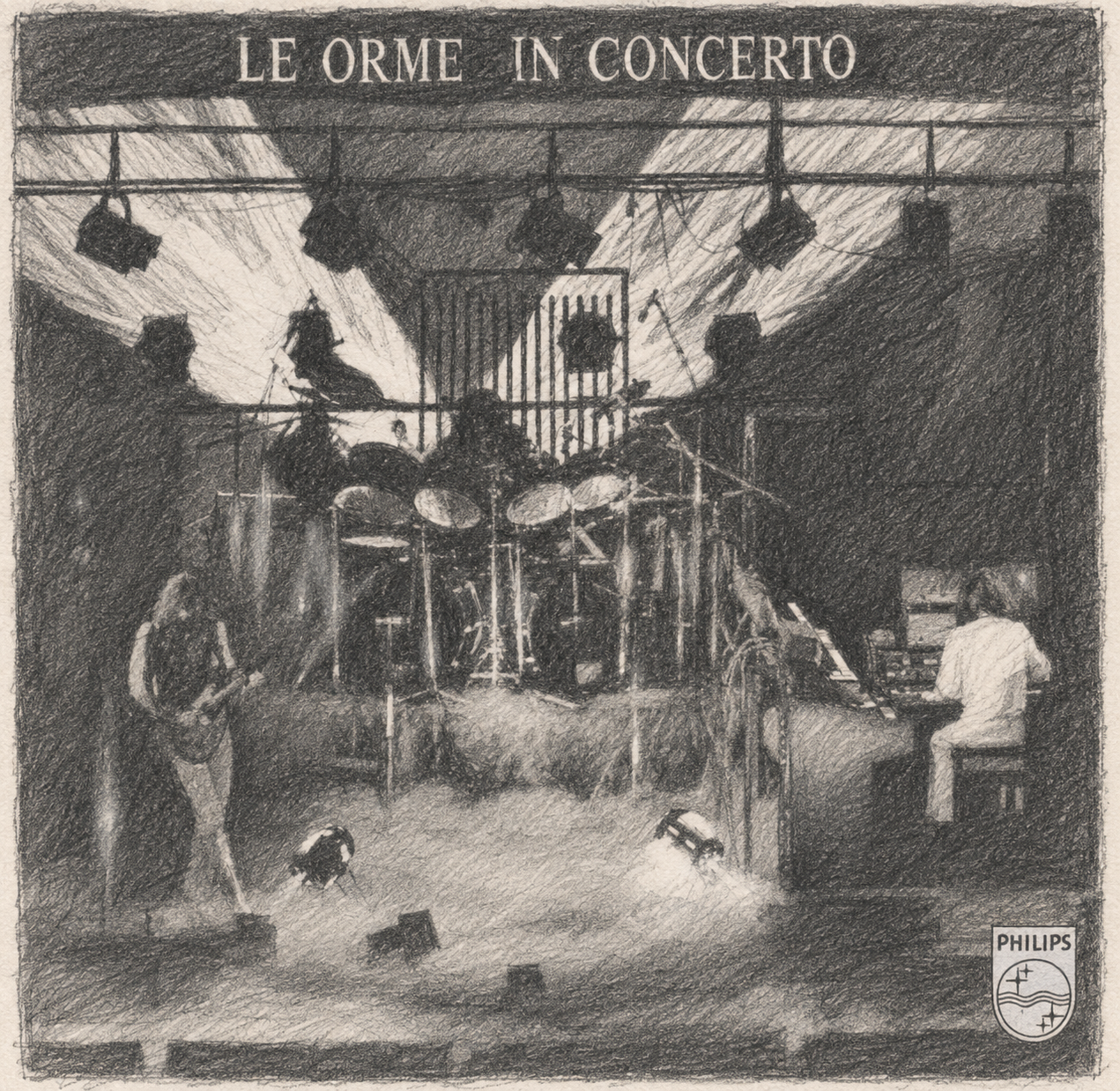
Le Orme were a force to be reckoned with in 1974.
They had just released Felona e Sorona, one of the absolute masterpieces of Italian Prog.
Soon, they would begin recording Contrappunti, which turned out to be even better.
They even started making waves abroad. They toured the UK in 1973. And Felona e Sorona would even get an English language version in 1974 (with lyrics provided by none other than Peter Hammill!)
Oh, and they toured. A lot. And played with incredible ferocity.
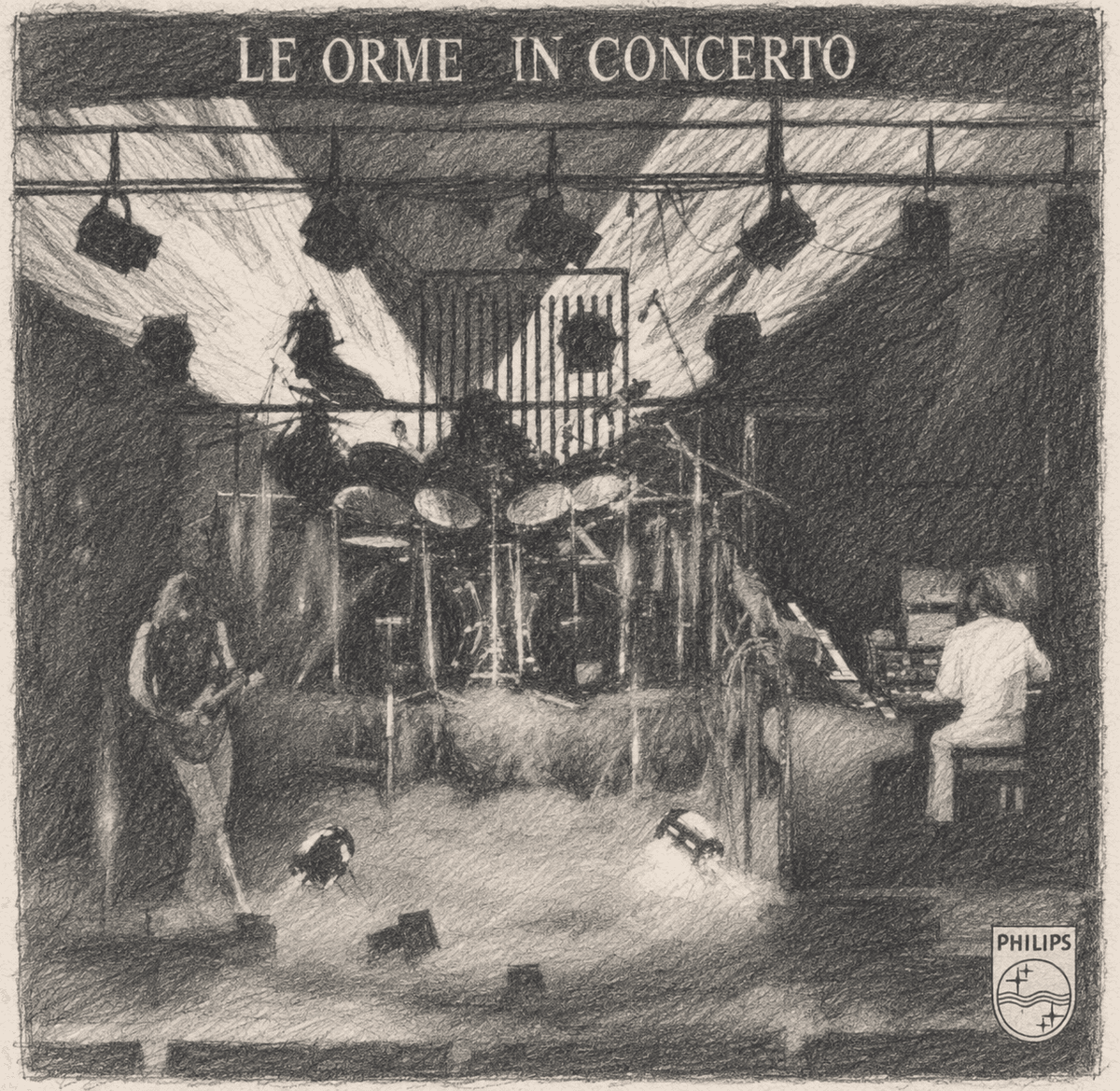
Which you sort-of hear on their live album, In Concerto.
For all its amazing musical ferocity, In Concerto is probably one of the worst sounding live albums I've heard. It's not an Earthbound level of sonic disaster, no. But it's not far off, either.
There's practically no mix. Or even if one was applied, the result doesn't come across in what you hear. Slight distortion is audible throughout the entire record. There's absolutely no clarity whatsoever. Bass disappears at times. Drums sound muddy. Keys switch between sounding too flat or too edgy...
The program leaves a lot to be desired, too. This is an album recorded on the Felona tour, after all, yet it features only 2 minutes of that wonderful album.
Instead, one side is dedicated to a completely unknown track (Truck of Fire). And to make matters worse, most of it is a drum solo that, according to one story, was actually lifted from another track.
And yet, I love it. I've been listening to it over and over lately, and I am in awe.
But listening to In Concerto also got me thinking...
We, prog fans, are not very lucky when it comes to live albums, are we?
Rock fans enjoy their Ya Ya's Out, Kiss Alive, or Live and Dangerous (Granted, none are perhaps 100% live but sonically they deliver.)
We, on the other hand, have to endure the murky sound of Yessongs, the distant, flat sonics of Welcome Back My Friends.... or the muddy, just a touch better than radio broadcast quality of Genesis Live.
All give us amazing music, there is no doubt about that. I rate Welcome Back.. far higher than the Stones' Ya Ya's. or Kiss Alive.
But they all also sound bad. And the interesting thing is that these albums are just the tip of the iceberg.
Prog history is filled with amazing live records that sound awful at times. And that is quite intriguing, actually. After all, prog is a music of sonic intricacies. This is not a wall of sound. Our music demands clarity to fully come through. And yet, it seems that sound was the last thing engineers considered.
Consider these albums, for example.
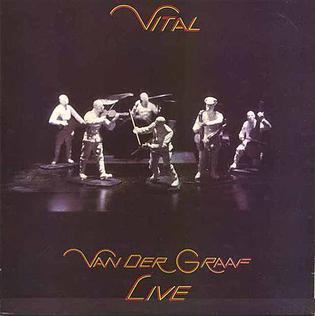
Van Der Graaf Generator
Vital
Charisma / 1978 / Listen on Qobuz
I doubt anyone present at the Marquee on that cold January evening in 1978 expected that performance.
Based on what was captured, that night they didn't meet the introvert, poetic Graaf of Pawn Hearts. On Vital, they are at their most chaotic, ferocious, and rawest. It's hard not to call it a barrage of sound, at times, and literally a wall of noise.
That last part, unfortunately, is partly down to the sound.
Graaf didn't have much luck recording Vital.
For one, I don't think the Marquee, a tiny club after all, was the best location.
The recording was plagued with technical issues, too. David Jackson's saxophone didn't get captured at all. Some of his playing spilled into Hammill's microphone, and that's what we hear on the album.
He's actually gone on record about it, concluding: “The finished album, Vital, is a personal disaster for me, I can’t bear to hear it.” (source)
Another issue was that Guy Evans, who mixed the album, could not create a clean or natural stereo image from the material available. As a result, the music sounds congested and overloaded, with instruments overpowering each other and spilling into other microphones.
But at the same time, the energy of this performance is insane and the murky, even dirty, sound accentuates it nicely.
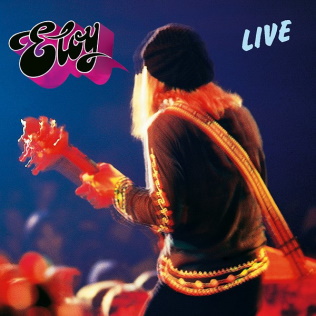
Eloy
Live
EMI / 1978 / Listen on Qobuz
Live caputures Eloy in 1978, during the Ocean tour, and gives us an incredible document of what the classic Eloy lineup (Bornemann, Schmidtchen, Matziol, and Rosenthal) were capable of on stage.
And they were amazing.
Before I ever heard Live years ago, I used to wonder whether Eloy were even able to recreate their intricate music in concert.
This album proved it.
"Poseidon's Creation" not only retains its studio atmosphere, but gets pushed even further (that bass!).
"Mutiny" gets that incredible guitar work in, and "Atlantis' Agony" is again, a true joy to hear live.
Unfortunately, again, the sound leaves a lot to be desired. And just like with Graaf, Eloy's live album has been plagued with technical problems from the start.
For one, many shows were recorded, yet most of the material turned out to be unusable. Frank Bornemann admitted himself: "Unfortunately, we've got so many technical problems with the recordings and many wonderful moments never found its way on the live album."
Eloy's elaborate laser display continuously interfered with the recording, adding buzz and other interference to the recordings. Attempts to mitigate that on the most usable tapes resulted in issues with the soundstage: keyboard layers blending together, drums sounding flat, instruments blending in busy passages...
It's not a bootleg quality disaster of Vital or Earthbound, but also, not the ideal quality to represent Eloy's multi-layered, spacious music.
The result, as Bornemann admits is “...not perfect in case of the sound quality, but at least here is the truth.”
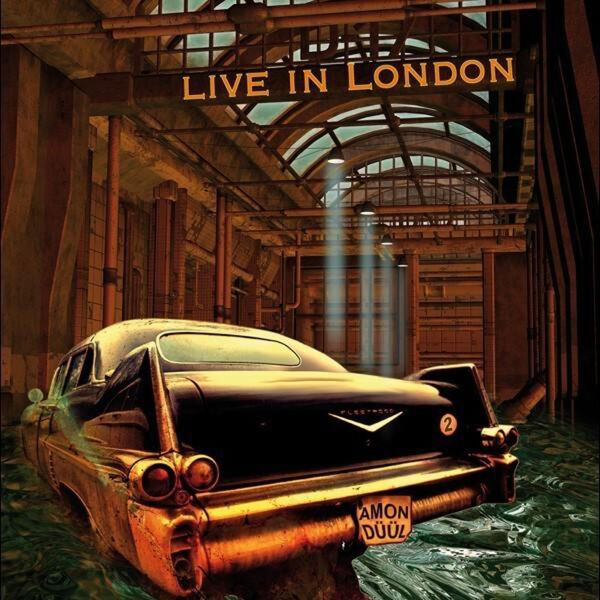
Amon Duul II
Live in London
SPV / 1974 / Listen on Qobuz
Amon Duul II's Live in London is another ferocious recording. And unfortunately, another album whose sound leaves a lot to be desired.
Unlike Eloy's or Graaf's albums, Live in London didn't suffer any major technical catastrophe.
The concert was professionally captured using the Pye Mobile Recording Unit by Vic Maile, an experienced engineer whose live credits around this period included Man and Nektar. It was also properly mixed at Studio 70 in Munich.
All in all, it should have sounded great.
And yet, its sound can only be described as murky or congested. Instruments overshadow one another, or disappear from the mix entirely. At times, we just hear a wall of sound, nothing else.
But it seems more to have been caused by the location of the recording than anything else.
Imagine, seven musicians: two drum kits, two guitars, several vocalists, all using effects like distortion and others, across Amon Duul II's complex arrangements... That requires space. Air. A place for the sound to reverberate fully.
But, in spite of what its name might suggest, the album wasn't captured in one of the premier venues in London. It was actually recorded in Greyhound in Croydon, a venue that could pack no more than 300 people. It had a very small, low-ceilinged stage. Fans would stand right in front of it, practically face-to-face with the band. And there was little room for complex sound equipment (although, promoters frequenty booked gigs requiring that in the venue.)
That's hardly an ideal setup for recording Amon Duul II. But that's what happened, and it probably explains the sound on the record.
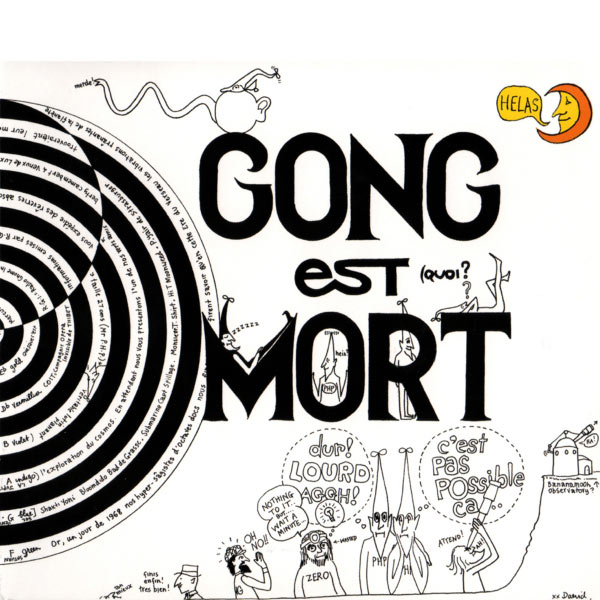
Gong
Gong Est Mort, vive Gong
Tapioca / 1977 / Listen on Qobuz
Gong Est Mort... documents an extraordinary one-off reunion of the classic Gong lineup, playing the group’s defining music for approximately three hours.
And given the enormous celebration the event was: a Gong reunion event, a 24-hour concert that closed with the reunited classic Gong performing music from Camembert Electrique and the complete Radio Gnome Invisible trilogy - you'd expect it to be captured accordingly.
Nope. What we get is a cramped, boxy recording that often struggles to separate the bass, synthesizers and multiple guitars, and delivers just a wall of sound.
Similarly to Amon Duul II's Live in London, there was no major technical disaster while recording. Most likely, the poor quality came down to similar challenges that resulted in poor sonics on Amon Duul II's live album:
Eight musicians. Dense arrangements. And then there's the venue, the Hippodrome de Pantin in Paris. Undoubtedly it was spectacular for that kind of a celebration. However, perhaps not an ideal location for capturing it live.
The Pantin was a permanent, fully enclosed circus big-top tent. And because the roof was a flexible, canvas canopy, it was known to behave terribly with heavy amplification. Instead of absorbing or cleanly reflecting sound like solid wood or plaster, the fabric absorbed mid-range frequencies while letting bass frequencies rattle through the structure, causing a muddy, boomy sound.
Because Pantin was so acoustically flawed, pressured by the complaints, the French government eventually ordered its demolition and commissioned a brand-new, purpose-built arena right next to it, The Zénith. (I actually saw the Cure live there in 2008 and can attest that this one is incredible acoustically.)
So, imagine Gong's music, with its density, complex arrangements in a venue like this...
It's no surprise that the album sounds no better than an average bootleg: boxy, cramped, congested. Balance shifts unnaturally, some instruments disappear at times (bass or keyboards, for example), too. And it actually sounds the worst when everyone is playing.
But the energy is there. To me, none of the sonic defects take away the joy of listening to Gong live.
That's a remarkable feat for music that rewards diving into its intricacies.
It’s a fascinating situation.
All these albums sound bad. Yet all are such a joy to listen to.
And sometimes, somehow, the sound quality makes them even better.
Members Only
This section is available exclusively to premium members.
Subscribe or upgrade your subscription to unlock it.A few records I've also been spinning recently
Patrick Duff – Visions of the Underworld (2013)
I've been a fan of Patrick Duff since the opening notes of Strangelove's Love and Other Demons. This is a different kind of music, though. Whereas Strangelove were dirty, gritty, and dark, this album is intimate, personal, and perhaps even darker. Fun fact: it was recorded in a cabin in the woods, with the windows open and the sound of nature seeping into the recording. To me, those nature sounds make some of these songs.
Frank Zappa – Meat Light: The Uncle Meat Project/Object (2016)
I've loved Zappa's Uncle Meat since forever and finally bit the bullet on the big Meat Light box, in hi-res. I haven't gone through it all yet, because it's nearly three and a half hours long, but what I've heard so far sounds incredible. The additional material complements the main album perfectly, and everything so far feels more coherent than the original.
Klaus Schulze – Live (1980)
I've been spending a lot of time with Schulze's records lately, especially Blackdance, Irrlicht, and Timewind, and eventually decided to explore this one too. It doesn't disappoint. If you like his sequencer-era work, or Tangerine Dream from around the same period, you'll love this one too.
Breakout – Blues (1971)
A legendary blues/psychedelia record from Poland. I recently dusted off my old copy, and it sounds as fresh and ingenious as the first time I heard it. It's also one I have a very personal connection with. My earliest memory is actually of my dad playing it.
I also published a few essays on the site this month:
Why "Earthbound" Would Be Awful If It Sounded Good
My thoughts on why King Crimson’s worst-sounding live albumworks so well precisely because it sounds so terrible.
The New "Wheels of Fire" Boxset Misses What Made Cream Great
I also ranted about the latest Cream box set because it does miss the mark representing the band.
Why I prefer Iron Butterfly's 'Heavy' to that other one
Finally, I shared my thoughts on why "Heavy" deserves more praise than it gets.
That’s it for this month.
I hope you found something here worth playing.
Pawel